
This article is about Largest Contentful Paint for the year 2026, or LCP, as it’s referred to.
Updated 27th April 2026
Well, now, it is one of the most important Core Web Vitals signals used by Google.
It measures how long it takes for the main content on a page to become visible.
This key element is usually a hero image, a large heading, or a large block of text.
If your LCP score sits in the three to four second range, you will see warnings in Google PageSpeed Insights.
LCP reflects how quickly users see something useful when the page loads.
A fast LCP score shows Google that your site is responsive, efficient, and user-friendly.
Why LCP Matters for SEO
Google prioritises pages that feel fast to real visitors.
Since LCP shows how quickly the main content appears, it is directly linked to user experience.
A slow LCP score can lead to higher bounce rates and lower engagement.
When Google sees that users leave quickly, rankings can drop.
A strong LCP score often improves search visibility because it proves that your page delivers important content without any delays.
Run a Google PageSpeed Test for Your Website
(Free Tool Below)
⚠️MOST WEBSITES SCORE UNDER 50
HOW ABOUT YOURS?
✅ Independently verified by Google PageSpeed
Try a FREE website speed check below
🔗 TEST YOUR SITE SPEED NOW
**PSI is a testing tool, not an endorsement.**
Green PageSpeed was recently featured on
Asset CleanUp’s customer testimonials page
We were also featured on WPX’s hosting website.
A true testament to our unparalleled speed optimisation.
You can read what they say:-
WPX APPRAISAL
Some Other Metrics Worth Checking When You’ve Read This…
TTFB (Time To First Byte)
ANOTHER IS
CLS (Cumulative Layout Shift)
AND
TBT (Total Blocking Time)
FINALLY
INP (Interaction to Next Paint)
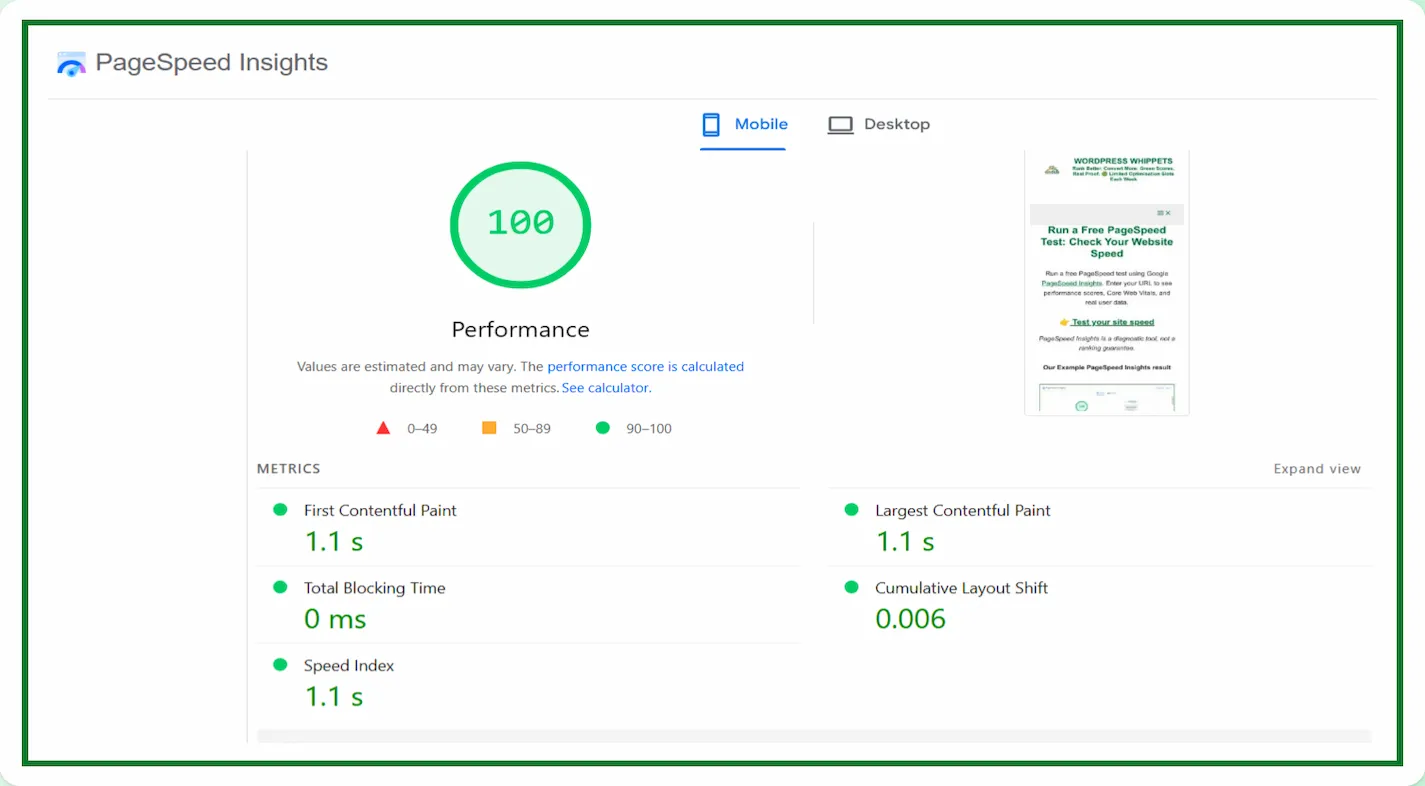
What Is a Good LCP Score in 2026
Google’s recommended LCP target for 2025 is 2.5 seconds or less.
Anything above this is considered slow.
When your LCP load takes more than four seconds, it is a problem. This can affect your rankings.
Keeping your LCP in the green zone is important to pass all Core Web Vitals.
Common Causes of Poor Largest Contentful Paint
Large Hero Images
Oversized hero images are one of the most common LCP issues.
When the browser loads a large image before displaying the rest of the page, the main content is blocked.
This increases loading time and delays the moment users see something meaningful.
Render Blocking CSS and JavaScript
CSS and JavaScript files can slow down LCP by blocking the browser from rendering content.
If these resources are processed before the largest element appears, the entire page feels slower.
Slow Server Response Times
If the server takes too long to send the first byte of data, the entire page load is delayed.
Slow hosting is one of the biggest hidden causes of poor LCP, especially on WordPress sites.
Cumulative Layout Shifts
Layout shifts can affect the calculation of the LCP element.
If banners or dynamic elements move content, the browser may recalculate which element is the largest.
This can delay the final LCP score.
We Compared PageSpeed Tests, So You Don’t Have To
We’ve also compared PageSpeed Insights with other popular speed tools – check them out below:
Firstly, PageSpeed Insights: Mobile vs Desktop
Then
PageSpeed Insights vs DebugBear
Then
Also
PageSpeed Insights vs WebPageTest
And
PageSpeed Insights vs SpeedVitals
Also
PageSpeed Insights vs Uptrends
As well as
Finally
PageSpeed Insights vs Lighthouse
Let’s break it down and find out why PageSpeed Insights is still the best option in 2026
How to Improve Your Largest Contentful Paint Score
Optimise Your Hero Image
Converting your main image to WebP or AVIF can significantly reduce file size.
Serving the correct dimensions for mobile and desktop also improves performance.
When an image is larger than necessary, the browser downloads more data than it needs.
This will slow down the loading process.
Reduce Render Blocking Resources
Minifying CSS and JavaScript reduces load times.
Removing unused CSS is also helpful, as many WordPress themes include large amounts of unused code.
You can delay non-essential scripts so they do not block the main content.
Improve Server Efficiency
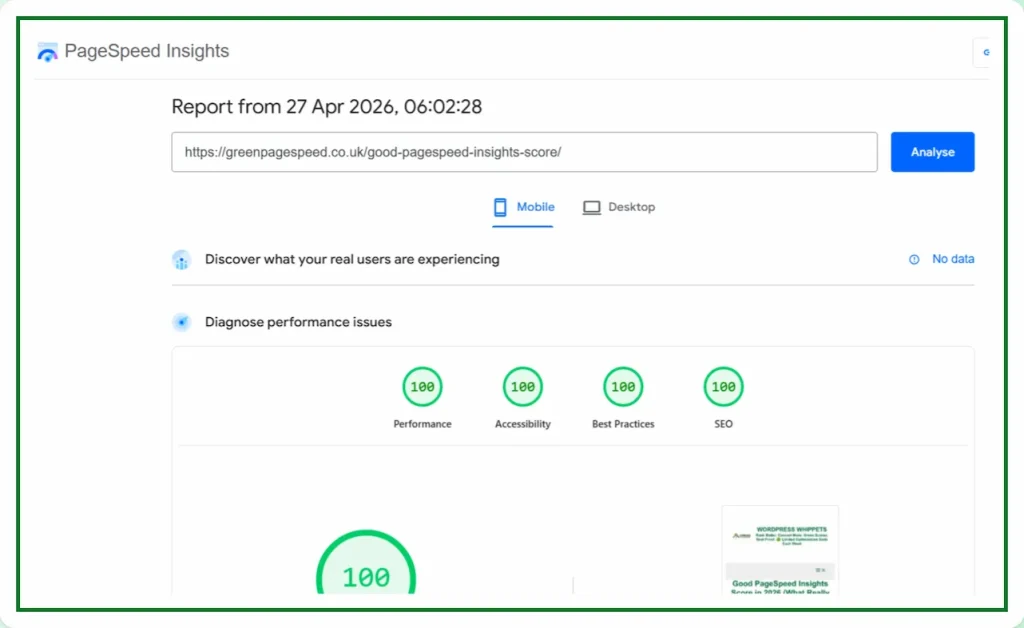
Fast hosting plays a major role in LCP performance.
A slow Time to First Byte forces the browser to wait.
Using a high-quality host, enabling caching, and serving assets through a global CDN can improve LCP.
When the server responds quickly, the browser can display the largest element sooner.
Preload Key Assets. It Reduces The Largest Contentful Paint
Preloading fonts or the hero image tells the browser what to prioritise.
When the browser knows which asset matters most, it can fetch it earlier.
This improves the stability and speed of the LCP element.
Avoid Layout Shifts
Setting the width and height attributes for images helps the browser reserve space before they load.
This avoids jumping elements and supports a faster LCP calculation.
A stable layout is essential for both CLS and LCP.
Testing and Monitoring Largest Contentful Paint
Test on Mobile First
Google measures Core Web Vitals using mobile performance.
Many websites perform well on desktop. Then it fails on mobile, due to the use of large images or slow hosting.
Testing your site on a mobile connection gives you a realistic view of your LCP score.
Use Google PageSpeed Insights
PageSpeed Insights identifies the exact LCP element on the page.
It also highlights the reasons for delays. Regular testing makes it easier to track improvements and catch issues early.
Make Small Improvements Over Time
You do not need major changes to fix LCP.
Small updates, such as optimised images and reduced script loading, can push your score into the green.
Regular maintenance ensures your LCP score benefits from continuous optimisation.
Why Passing Largest Contentful Paint Is Essential in 2026
A strong LCP score helps your page feel immediate and responsive.
When users view the main content, they will stay longer and interact more.
This sends positive signals to Google, which can improve rankings.
LCP also contributes to the overall Core Web Vitals assessment.
When LCP, INP, and CLS are all in the green, your website has a chance of performing well in search results.
The Largest Contentful Paint, Final Thoughts
Improving LCP is one of the most effective ways to enhance user experience and boost SEO performance.
Optimised images, fast hosting, clean code, and stable layouts all contribute to a better LCP score.
When your website loads its main content quickly, visitors will trust your site and engage with it more.
Consistent optimisation helps you maintain a strong LCP score and stay competitive as Core Web Vitals continue to shape rankings.